Travel Around Netherlands

ContinentsEurope

CountriesNetherlands

CitiesUtrecht, Amsterdam
The Netherlands is one of those countries where getting around can become part of the travel experience rather than simply a way of reaching the next attraction.
Distances are short, railway connections are frequent, and cycling infrastructure makes it surprisingly easy to leave a station and continue exploring on two wheels.
For most visitors, a rental car is unnecessary. A combination of trains, local transport, walking and bicycles usually provides more freedom, especially when the itinerary includes several cities.
Build The Trip Around Trains
Rail is the easiest backbone for a journey across the country. Trains connect major cities frequently, and many journeys are short enough to make day trips realistic without constantly changing hotels.
Amsterdam and Utrecht, for example, are only around 20 minutes apart by direct train, with tickets starting at approximately €8.70. A journey from Amsterdam to Rotterdam takes just over an hour and starts at around €20.20.
This makes it possible to stay in one city and explore several others during the same trip. Utrecht works particularly well as a base for travelers who want a calmer atmosphere while remaining well connected to the rest of the country.
There is usually no need to buy a special transport card for a short holiday. Contactless debit and credit cards can be used to check in and out on trains, buses, trams and metro services.
Use A Bicycle For The Final Stretch
The Dutch transport system becomes much more interesting when trains and bicycles are combined.
Many railway stations have large bicycle parking areas, and bikes can be rented near stations for shorter local journeys. A standard station bicycle costs around €4.80 for 24 hours, making it an inexpensive way to explore areas beyond the immediate city center.
Cycling is particularly enjoyable in smaller cities and quieter areas, where dedicated paths often run beside canals, fields and residential neighborhoods.
Visitors should still treat cycle lanes seriously. They are part of the transport network rather than recreational footpaths, and local cyclists often travel quickly. Walking in a marked bike lane is one of the easiest mistakes for first-time visitors to make.
Netherlands
Explore Cities Without A Car
Inside major cities, trams, buses and metro services cover the areas that are too far to walk.
Amsterdam has an extensive tram network, while Rotterdam has both trams and metro lines. In compact centers such as Utrecht, Delft or Haarlem, walking may be all that is needed once the train arrives.
Contactless payment makes spontaneous travel particularly easy. The same bank card or mobile device should be used when checking in and checking out so the correct fare can be calculated.
For travelers staying several days, individual journeys are often simpler than buying complicated tourist transport products unless the itinerary involves very intensive daily use.
Take The Scenic Route
Not every journey needs to be the fastest one. Some of the most enjoyable Dutch travel experiences happen between the main cities.
A train can be combined with a bicycle ride through flat countryside, while ferries provide useful connections across rivers and waterways in several parts of the country. Many smaller towns also sit close enough together to create easy day-trip combinations.
Spring is especially attractive for cycling through rural landscapes, while summer offers longer daylight hours. Autumn can be quieter and more atmospheric, although wind and rain become more unpredictable.
Know When A Car Makes Sense
A car becomes useful mainly when the trip focuses heavily on remote villages, nature reserves or rural accommodation far from railway stations.
Even then, renting one only for part of the holiday can be more practical than keeping it throughout the entire trip. Parking in major cities can be expensive, while trains often deliver travelers directly into the center.
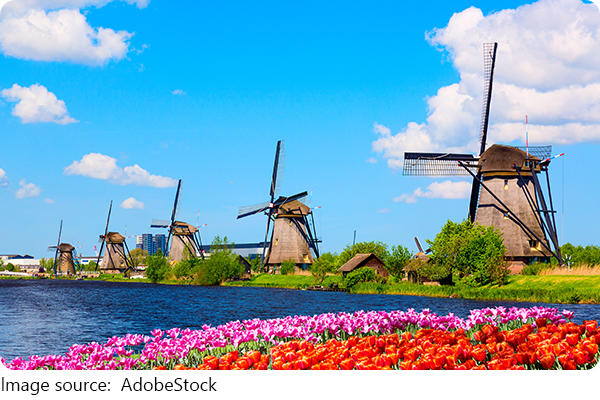
For a typical first visit, the most efficient formula is simple: travel between cities by train, explore central districts on foot, and rent a bicycle when the landscape deserves a slower look. In the Netherlands, moving around efficiently does not mean rushing — it often creates more opportunities to actually see the country.