Germany's Best Hikes

ContinentsEurope

CountriesGermany

CitiesDresden
Germany rarely gets the same hiking attention as Switzerland or Austria, yet its landscapes are remarkably varied. Within a single trip, walkers can cross Alpine valleys, follow riverside vineyards, climb through sandstone formations or spend days under the dense canopy of the Black Forest.
Many trails are free to use, well marked and accessible by public transport, making the country particularly convenient for travelers who want to explore without renting a car.
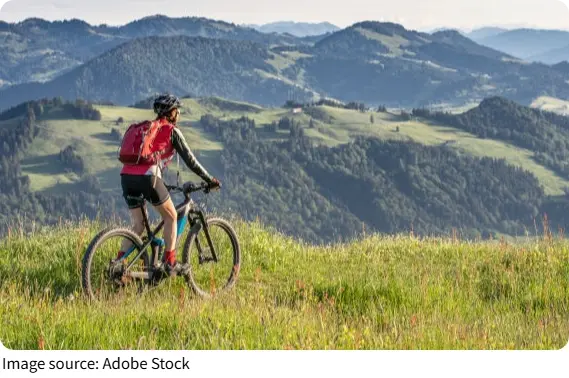
Zugspitze For Alpine Drama
Germany’s highest mountain, the 2,962-meter Zugspitze, is the obvious choice for hikers looking for a serious Alpine challenge.
Several routes lead toward the summit, but the climb through the Reintal valley is among the most approachable for experienced walkers. It is long rather than technically extreme and is often divided over two days with an overnight stay in a mountain hut.
A less demanding option is to hike around Eibsee below the mountain and use the cable car for the summit. A one-way Zugspitze ride costs €46, while a return ticket is €78 in the 2026 summer season.
Nearby Partnach Gorge offers another dramatic but much shorter walk past waterfalls and narrow rock walls. Adult admission is €10.
Saxon Switzerland For Rock Views
Close to Dresden, Saxon Switzerland feels very different from Bavaria.
Its most famous long-distance route is the Malerweg, a roughly 116 km trail through bizarre sandstone towers, forests and deep valleys. It normally takes about a week, although individual sections work well as day hikes.
The Bastei area provides the easiest introduction, with panoramic viewpoints above the Elbe and paths weaving among striking rock formations.
Most hiking routes are free, so the main costs are transport, accommodation and food.
Saxon Switzerland
The Black Forest For Long Walks
The Westweg is one of Germany’s classic long-distance trails.
Running for roughly 285 km through the Black Forest, it combines wooded ridges, lakes, open highlands and traditional villages.
Walking the entire route requires around two weeks, but shorter sections near Titisee, Feldberg or the northern Black Forest are easy to build into a shorter holiday.
The best period is generally late spring through early autumn, when higher paths are more reliable.
Rheinsteig For Castles And Vineyards
For scenery mixed with history, the Rheinsteig follows the Rhine through forests and castle country.
The full route stretches more than 300 km, but its greatest advantage is flexibility. Railway stations along the river make it easy to complete a section and return by train rather than retracing the same path.
Spring and early autumn are especially attractive, with milder temperatures and fewer summer crowds.

Harz For An Easier Escape
Northern Germany also offers rewarding mountain landscapes.
The Brocken, the highest point in the Harz Mountains, can be reached by several well-marked forest routes. The climb is far gentler than an Alpine summit and suits travelers who want a full hiking day without technical terrain.
Germany’s strongest advantage is this range. Its best trails are not variations of the same landscape: they move from high mountains to forests, cliffs and river valleys, giving hikers a completely different experience from one region to the next.