Xian's Terracotta Warriors

ContinentAsia

CountryChina
The familiar photos show rows of clay figures standing shoulder to shoulder in a vast hall. Seeing the Terracotta Warriors in person also reveals details that disappear in those panoramic views.
A visit combines the scale of an archaeological site with the close observation of a sculpture exhibition. Knowing where to pause, and how to arrange the journey from Xian, helps keep it from becoming a hurried photo stop.
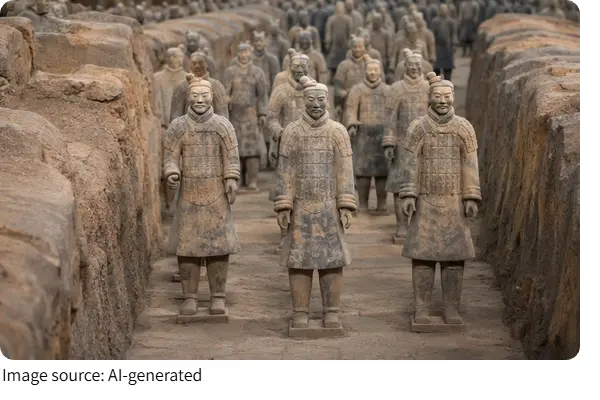
What you're actually looking at
Farmers digging a well in 1974 found the first fragments. The figures include infantry, archers, charioteers, and horses, with differences in clothing, posture, and individual features on their faces. Pit One alone is estimated to contain roughly 6,000 clay figures and horses, not all of them exposed for visitors to see.
The figures were originally painted, rather than left in the earthy tones familiar today. Much of that color deteriorated quickly after excavation. Look closely at surviving pigment where it is displayed, rather than expecting the entire formation to retain its original appearance.
The three pits
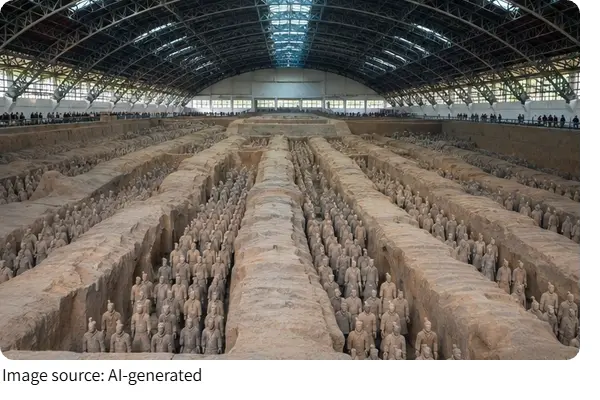
Pit One is the headline: a long, hangar-like building over the main formation. Walk toward the far end, then work back toward the entrance where the permitted route allows. The changing viewpoint makes it easier to distinguish individual figures from the larger arrangement.
Pit Two holds cavalry and archers, alongside areas where excavation remains unfinished. Its individual display cases offer a closer look at details such as headwear, clothing patterns, and footwear. These smaller details are worth as much attention as the broad view across the pit.
Pit Three is the smallest and is interpreted as a command post. Skip nothing, but avoid treating each hall as a timed checkpoint. Leave room in the schedule for the exhibition hall as well as the pits, especially if you want to examine the objects more closely.
Getting there from the city
The museum is in Lintong District, outside central Xian. For public transport, take Metro Line 9 to Huaqing Pool Station, then transfer to Lintong Bus 602 or Tourist Bus 613. Allow approximately 1.5 hours for the journey, with a combined fare of around 10 to 15 yuan.
A taxi offers a more direct alternative, with an estimated one-way fare of 160 to 220 yuan from downtown and a journey of about an hour. Traffic can affect the trip, so leave a margin between your planned arrival and your booked admission time.
Emperor Qinshihuang's Mausoleum Site Museum
Tickets and visiting hours
Full admission is 120 yuan. Reserve online before travelling, and bring the original passport used for the booking. Tickets are linked to identification, so make sure the booking details match the document you will carry.
Entry starts at 8:30 a.m. Last admission is 5 p.m. from March 16 to November 15, and 4:30 p.m. from November 16 to March 15. These are entry deadlines, not closing times. The museum closes at 6:30 p.m. and 6 p.m., respectively; check special notices before travelling.
Help with the details
Arrange an official English-speaking guide or ask about an audio guide inside the museum. Confirm availability and charges before paying. Context helps distinguish the different figures, but avoid hiring someone solely because they approach you outside the entrance.
Beyond the main halls
The admission ticket also covers Lishan Garden, connected by a free shuttle. Its displays include bronze chariots and horses, acrobatic figures, and civil official figures. Decide before departure whether to include this separate area, rather than discovering it when your return transport is already due.
Where to stay and eat
For a city base, Sofitel Xian on Renmin Square is one option within the city walls; its Azur restaurant is a dining option. Compare room rates for your dates. If continuing to Lishan Garden, eat near the main museum first, where the exit route passes shops and restaurants.
Before leaving the hotel, save your reservation details offline and confirm the return route. Keep your passport accessible for the museum's identity checks.