Saigon Without the Guesswork

ContinentsAsia

CountriesVietnam
Hi, and welcome. Ho Chi Minh City rewards you the moment you stop treating it as a single blob on the map.
Most first-timers land in District 1, walk the same three blocks around Nguyen Hue, and leave thinking they've seen the city. They haven't. The place is really a stack of neighborhoods, each with its own rhythm, and once you know which one you're in, the whole trip gets easier.
Pick your district first
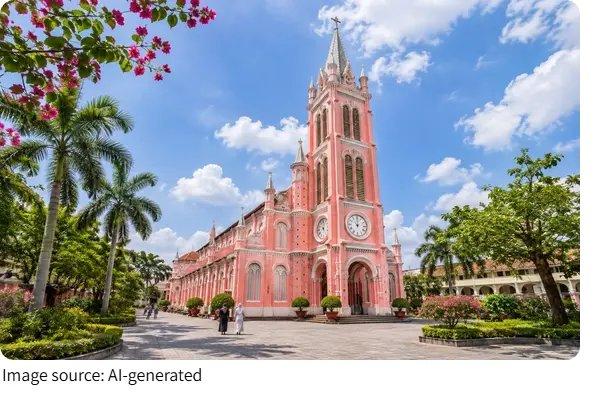
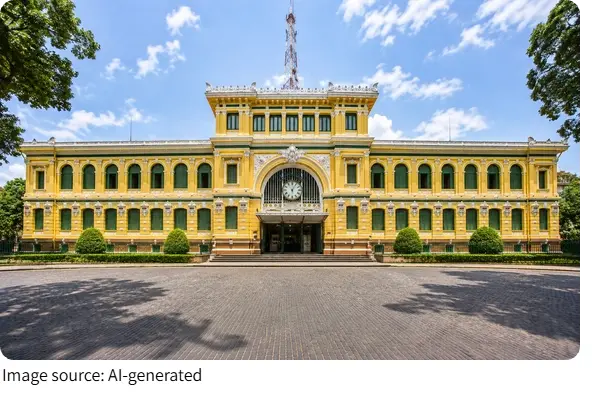
District 1 is the landing pad, and that's fine. Ben Thanh Market, the Notre Dame Cathedral, and the Central Post Office all sit within a short walk of each other, and the Reunification Palace is right there too. But if you want the city to feel less like a tourist corridor, sleep in District 3 instead. It's quieter, still central, and you can walk to the Battle Remnants Museum in about fifteen minutes. District 2, now officially called Thu Duc after the merger, has a relaxed expat feel and good cafes, though you'll rely on rides to get anywhere central.
Getting around without the stress
Grab is the default here, and it works. A GrabBike across District 1 runs around 20,000 to 30,000 VND, roughly $1. A GrabCar for the same distance is closer to 60,000 VND, under $3. Metered taxis from Mai Linh and Vinasun are reliable too, but agree on the meter or confirm the app fare before you get in. The airport is about 8 km from the center, and a GrabCar from Tan Son Nhat to District 1 typically costs 150,000 to 200,000 VND, so around $6 to $8. Skip the unmarked cars waving at you in the arrivals hall.
Ho Chi Minh
Two days that actually cover ground
Start day one early at the Conflict Remnants Museum, which opens at 7:30 and gets crowded by mid-morning. Then walk to the Reunification Palace and the cathedral, and finish with a slow loop through the Ben Thanh area as the market shifts into evening. Day two, head out to Cholon in District 5 for the Binh Tay Market and the Thien Hau Temple, then come back for the fine arts museum on Pho Duc Chinh Street. That building alone is worth the entry fee, which is under $3.
What things cost, in plain numbers
A decent mid-range hotel in District 1 runs $40 to $70 a night, and a hostel bed is closer to $10. Street coffee, the strong kind with condensed milk, is 20,000 to 35,000 VND, so a dollar or two. Museum entry fees range from about 60,000 VND. If you're budgeting, $50 a day covers a comfortable room, local meals, and rides without much squeezing, and you can do it on $40 if you're lean about it.
Timing and the heat question
The dry season from December to April is the comfortable window, though March and April push past 35°C. The rainy months from May to November mostly mean short afternoon downpours, not all-day washouts. Go out early, come back for lunch, and head out again after 3 pm. That rhythm matches how the city itself moves. Book your room a few weeks in advance if you're arriving around Tet, as prices jump and vacancies tighten.
A small tip that saves real time: keep 200,000 VND in small notes for markets and street stalls, because breaking a 500,000 VND note in a busy lane is a hassle. And carry your own napkin pack. It's the little prep that keeps the day moving.
Ho Chi Minh City is easier than its reputation suggests once you've picked your base, sorted your rides, and stopped trying to see it all in one sweep. Give it two full days, follow the early-start rhythm, and let the districts show you their own pace. You'll come back with a much better story than you'd get from a single block in District 1.